
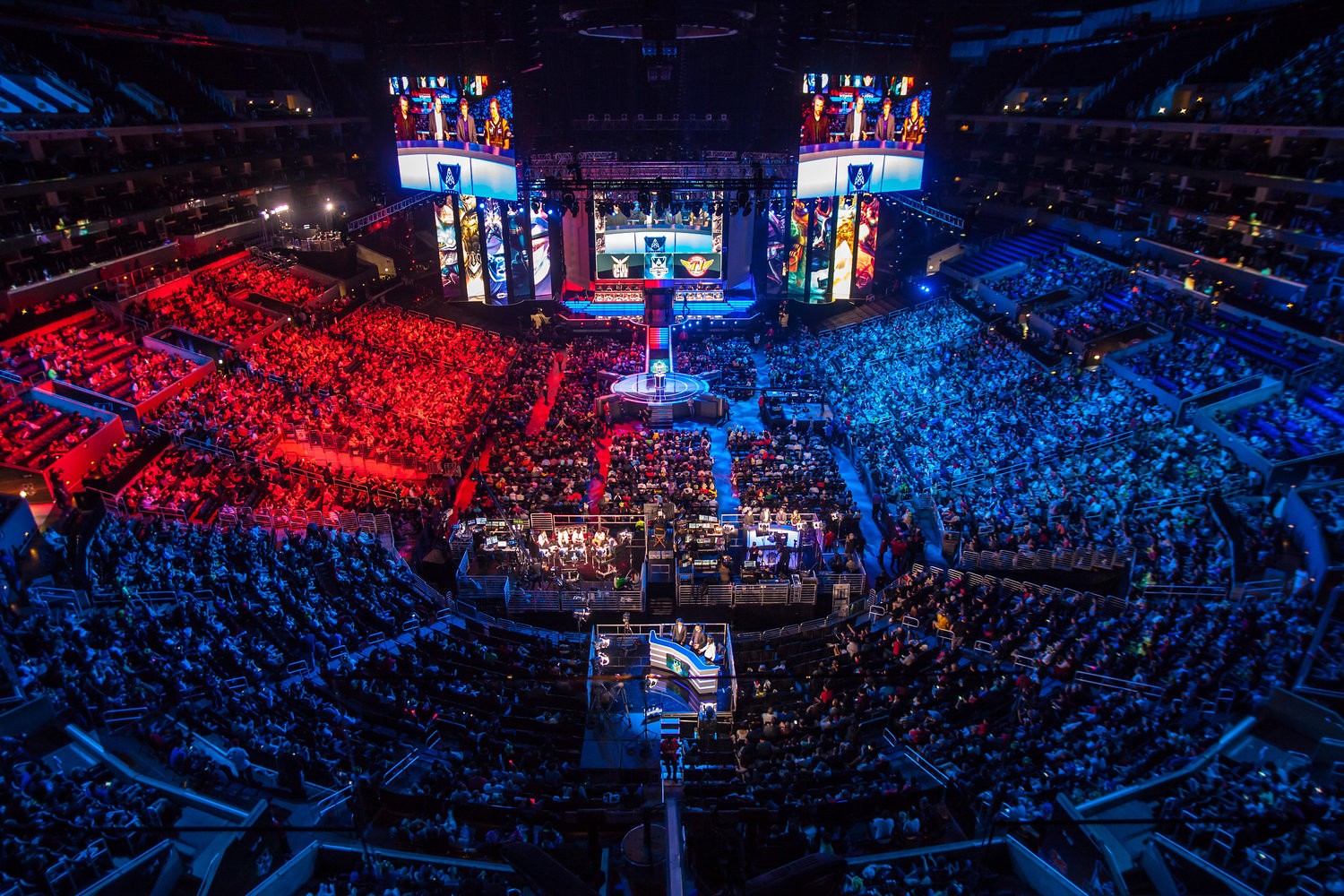
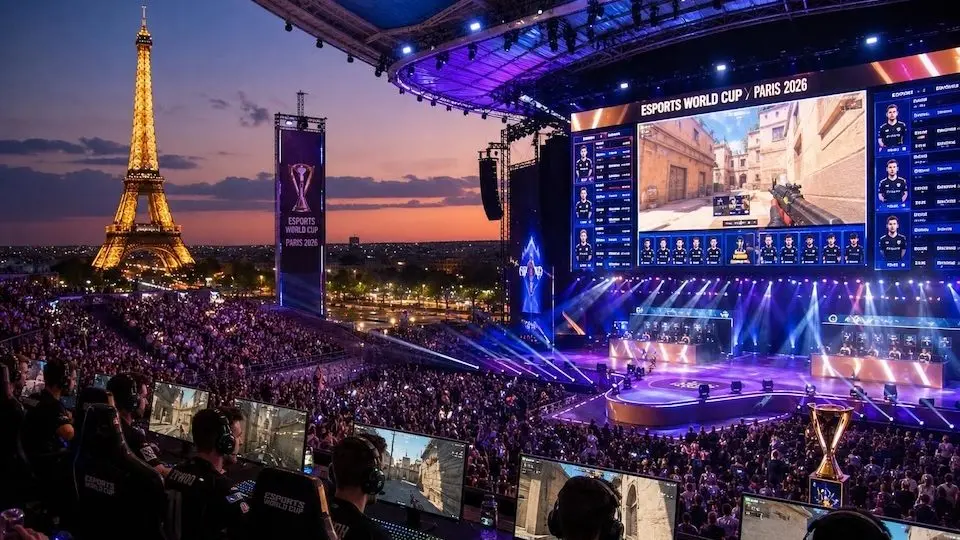
Eight weeks. That is how long the Esports World Cup Foundation had to move the largest event in esports from Riyadh to Paris, after escalating conflict in the Middle East disrupted air travel and made the original venue unviable. The relocation was announced roughly two months before the opening ceremony.
The move forced a full redesign: a new venue at Paris Expo Porte de Versailles, new stage builds, and new RF planning in a dense urban environment. What made an eleventh-hour pivot possible at all was a modular production system, built on flight cases rather than fixed control rooms, so the setup could travel and be rebuilt somewhere else on short notice.
That is the visible story. The infrastructure story underneath it is more useful for anyone building streaming systems.
Scale that keeps multiplying
The 2026 edition runs at a scale that is hard to model from a single planning document:
- More than 2,000 players, drawn from over 100 countries.
- 24 games across 25 tournaments, competing for a prize pool above $75 million.
- More than 100 media partners, with coverage reaching 160 countries in 40 languages.
- Up to 5,000 approved co-streamers through the Creator League, backed by a $2 million reward pool.
That last number is the one worth sitting with. Most of those 5,000 co-streamers will not broadcast from Paris. They will stream from home, adding thousands of independent delivery points that the core production team does not control directly. Each one is a new origin of demand.
The volume behind those figures is substantial. The Foundation targets around 7,000 hours of content across the tournament, with roughly 10 to 12 live hours per stage, four to five days a week. On the delivery side, ESL FACEIT Group reports 110 encoders processing close to 280 streams concurrently toward platforms and media partners. That is not a single peak to plan for; it is sustained, parallel load in 40 languages across 160 countries.
The peaks arrive before the peak
The event's commercial team has confirmed that group stages and last-chance qualifiers already logged historic viewership highs, ahead of the finals that most platforms plan their capacity around. The stated ambition is to beat last year's reach of roughly 750 million.
That is the pattern worth naming. The moment planners flag as "the big one" is not always where the traffic spike lands first. Qualifiers, side stages, and regional feeds can each outperform the model without warning.
Sebastian Fjellström, Technical Manager at ESL FACEIT Group, put the scaling problem in plain terms:
When you do one stage, it's usually fine. When you do two stages the complexity multiplies fast.
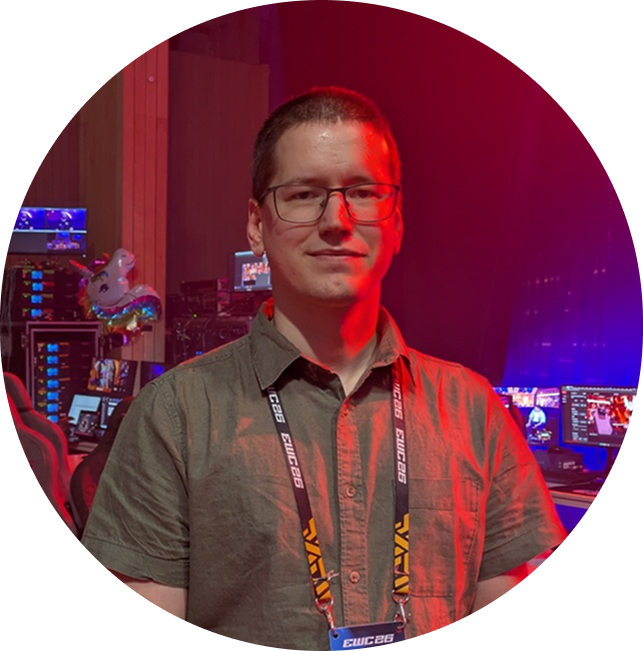
He was describing production, but the same curve applies to delivery. Demand in live esports does not grow in a straight line, and it does not wait for the schedule to say so.
What unpredictable demand means for delivery infrastructure
Live esports compresses a problem every streaming platform already has: audience behavior that does not match the forecast. Three characteristics stand out:
- Peaks arrive at unscheduled moments, not only at the marquee event.
- Delivery points multiply fast. Five thousand co-streamers means five thousand new origins of demand.
- Infrastructure has to flex on short notice, not only against long-term capacity plans.
CDN-only architectures are built for predictable load curves. When the biggest spike hits a qualifier nobody modeled for, available headroom matters more than the base plan.
Why peer-assisted delivery belongs as a permanent layer
This is where peer-assisted delivery earns its place as a permanent layer, not a peak-day patch. By distributing load across viewers who are already watching the same stream, Quanteec turns the audience itself into delivery capacity that grows with demand:
- Extends delivery capacity by 5x to 50x, with no new infrastructure to deploy.
- Offloads up to 90% of traffic away from the CDN.
- Reduces delivery costs by 25% to 50%.
- Lowers energy use by 45% to 66%.
- Holds quality of experience steady, with ultra-low latency and near-zero rebuffering, even when the unexpected spike is really just Tuesday's qualifier.
The mechanism scales in the same direction as the problem. The more viewers arrive at once, the more peers are available to serve one another, so the moments that would strain a centralized path are exactly the moments peer-assisted delivery contributes the most.
The takeaway
The Esports World Cup team solved a venue problem in eight weeks because their production system was modular from day one, not bolted together after the original contract was signed. Flexibility was designed in, not added under pressure.
Streaming delivery deserves the same logic. Modular production let the event move in eight weeks; peer-assisted delivery is what lets the distribution side flex just as fast, absorbing those 280 concurrent streams and their unscheduled peaks without deploying new infrastructure. Same principle, applied one layer down.
The next spike probably is not coming from the final everyone is watching for. It is coming from the feed nobody put in the plan, and the infrastructure should already be ready for it.